Authors: Archbishop Desmond Tutu and
Douglas Carlton Abrams
illustrated by A.G. Ford
From the Book Jacket: Desmond was very proud of his new bicycle. He was the only child in the whole township who had one, and he couldn't wait to show it to Father Trevor.
When Desmond takes his new bicycle out for a ride, his pride and joy turn to hurt and anger when some boys shout a very mean word at him. No matter what he tries, Desmond can't stop thinking about what the boys said. With the wise advice of kindly Father Trevor, Desmond learns an important lesson about understanding his conflicted feelings and how to forgive.
Based on a real-life experience from Archbishop Desmond Tutu's own childhood in South Africa, Desmond and the Very Mean Word eloquently shows a child's realization that true forgiveness comes from within and that all people deserve compassion, whether or not they say they are sorry.
Why It's On My Bookshelf: This has been an important picture book I've been using with our fourth and fifth graders. Sometimes I'm so saddened to see how horribly mean some of them can be to each other. So when this book arrived I knew it had a message that would touch their hearts and hopefully stop the mean words. Reminding kids they can make a decision to stop a hurtful conversation and take responsibility is what this book is all about.
There is a conversation in the book between Father Trevor and Desmond that we focused on:
Father Trevor sighed. "That is the problem, Desmond. You will get them back, and they they will get you back, and soon our whole world will be filled with nothing but 'getting back.'"
And there it is! Stopping the cycle of hurt is what my students need to hear. Especially because some of them come from homes where that cycle is happening. Forgiveness is an absent thing in many of their lives. When I asked if they could define forgiveness - not many hands went up. We teach a lot about apologies but it became clear the other part of the equation needs to be put out there too.
It is never revealed what the mean word is used against Desmond. I was concerned some kids would get hung up on that. We did have a small discussion on what the mean words might have been. But what we kept coming back to was how those words can have such a damaging impact. And that's why we need forgiveness............yep!
A Link to This Book:
Showing posts with label forgiveness. Show all posts
Monday, March 4, 2013
Saturday, February 12, 2011
Book Review: The Sandwich Swap
Authors: Queen Rainia Al Abdullah and Kelly DiPucchio
illustrated by Tricia Tusa
Book Website: The Sandwich Swap
Interest Level: Ages 4-8
From The Book Jacket: Lily and Salma are best friends. They like doing all the same things - jumping rope, drawing pictures, playing on the swings. And they always eat lunch together. Sure, they don't eat the same lunch. Lily eats peanut butter and Salma eats hummus - but what's that between friends? It turns out, a lot. And before they know it, it's a food fight. Can Lily and Salma put aside their differences and save their friendship? Or will a sandwich come between them?
Her Majesty Queen Rania and bestselling author Kelly DiPucchio tell a story inspired by her Majesty's own childhood. Salma and Lily reach the true spirit of tolerance and acceptance. The smallest things can pull us apart - until we learn that friendship is far more powerful than difference.
Why It's On My Bookshelf: Awards should be plastered all over this book's cover. Which by the way, is the most darling cutest cover I have just about ever seen. The students took one look at The Sandwich Swap and said, "Read us that one!!" Sometimes I bring in a few books to each of my lessons to give them a preview of next weeks story. Even in the hallway, a second grade student said to me, "When are you going to read us The Sandwich Swap?" Apparently, they can sniff out a good book just by it's cover. But this is more than good, it is GREAT.
The lessons learned by both girls in the story is EXACTLY the kind of message students need to hear. Working in a culturally diverse school I know students have many curiosities about one another. But sometimes, those curiosities can sadly turn into put-downs towards one another. It divides everyone which is what happens in the story. Just look around the world, it's pretty obvious we need to start these conversations and teachings early in life. A first grade student said, "I hope everyone goes to multi-cultural night tomorrow to make more friends!" The lovely 'pot-luck' ending will make you think about what your own school is doing to help promote cultural diversity.
The Sandwich Swap is a wonderful reminder and encourager to embrace and appreciate other's differences. It's amazing how a book can increase awareness, sensitivity, and open hearts and minds. This was an impactful read and there is no doubt it has helped increased my school climate. The students clapped as I finished reading the last page. Clapping for diversity! Love it.
A Link to This Book and Others You Might Find Helpful:
Saturday, August 14, 2010
Book Review: The Hundred Dresses
Author: Eleanor Estes
Illustrated by Louis Slovodkin
Interest Level: Ages 9-12
From The Book Jacket: Wanda wears the same faded blue dress to school every day - yet she says she has one hundred beautiful dresses at home, "all lined up." The other girls don't believe it, and when Peggy starts a daily game of teasing Wanda about the hundred dresses, everyone joins in. Maddie, Peggy's best friend goes along with the game, but she secretly wonders whether she can find the courage to speak up in Wanda's defense.
It's not until Wanda fails to come to school one day that her classmates learn the truth about the hundred dresses - and Maddie and Peggy learn the meaning of kindness and generosity of spirit.
Why It's On My Bookshelf: This is a solid resource I use with my bullying curriculum for grades 3-5. Some children are relentlessly picked on. I am usually part of the healing process when it comes time for apologies and making amends in these situations. But what if you don't get the chance to say you're sorry? The Hundred Dresses is a stand out read in my opinion because of the remorse factor in one of the characters. She feels awful about her behavior. I live for the discussion this draws out of students. There's a bit of a mean girls theme going on in the story. It is so sad to see a group mess with someone's feelings. Often times, those participating don't want to be part of the teasing and deep down wish they could put a stop to it. The Hundred Dresses speaks directly to those students. There is an energy in the room when we finish reading. It's a story that increases kindness, empathy, and making amends with those we have injured. I also see groups forming in 4-5 grades so this helps me break down those "clique" barriers. PS. This is a true story!

A Link to This Book and Others You Might Find Helpful:
Illustrated by Louis Slovodkin
Interest Level: Ages 9-12
From The Book Jacket: Wanda wears the same faded blue dress to school every day - yet she says she has one hundred beautiful dresses at home, "all lined up." The other girls don't believe it, and when Peggy starts a daily game of teasing Wanda about the hundred dresses, everyone joins in. Maddie, Peggy's best friend goes along with the game, but she secretly wonders whether she can find the courage to speak up in Wanda's defense.
It's not until Wanda fails to come to school one day that her classmates learn the truth about the hundred dresses - and Maddie and Peggy learn the meaning of kindness and generosity of spirit.
Why It's On My Bookshelf: This is a solid resource I use with my bullying curriculum for grades 3-5. Some children are relentlessly picked on. I am usually part of the healing process when it comes time for apologies and making amends in these situations. But what if you don't get the chance to say you're sorry? The Hundred Dresses is a stand out read in my opinion because of the remorse factor in one of the characters. She feels awful about her behavior. I live for the discussion this draws out of students. There's a bit of a mean girls theme going on in the story. It is so sad to see a group mess with someone's feelings. Often times, those participating don't want to be part of the teasing and deep down wish they could put a stop to it. The Hundred Dresses speaks directly to those students. There is an energy in the room when we finish reading. It's a story that increases kindness, empathy, and making amends with those we have injured. I also see groups forming in 4-5 grades so this helps me break down those "clique" barriers. PS. This is a true story!
A Link to This Book and Others You Might Find Helpful:
Friday, March 12, 2010
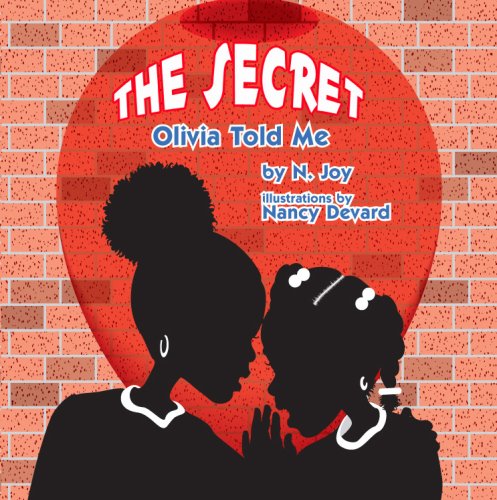
Book Review: The Secret That Olivia Told Me
Author: N. Joy
Illustrations by Nancy Devard
Interest Level: Ages 7-12
About This Book: Can you keep a secret? Olivia has a secret - a BIG secret. It's a secret that she tells only to her very best friend. And her friend promises she won't say a word. But the secret is really BIG and really Juicy. What happens when a trusted friend slips and the secret gets out?
Why It's On My Bookshelf: I have loved using this book for the past few years. AND I still LOVE it. In 4th grade, I notice the start of a huge surge of gossip and rumors. Sometimes it turns really mean. I know, sad. I start reading The Secret That Olivia Told Me in 2nd grade. You gotta start early on icky gossiping behavior. I keep this book on display in my room. The powerful cover is a reminder to guard yourself from gossip. Kids love the illustrations and the metaphor of the balloon. This is a useful tool so do not hesitate even for a second about whether you should put this book on your shelf.

A Link to This Book and Others You Might Find Helpful:
Illustrations by Nancy Devard
Interest Level: Ages 7-12
About This Book: Can you keep a secret? Olivia has a secret - a BIG secret. It's a secret that she tells only to her very best friend. And her friend promises she won't say a word. But the secret is really BIG and really Juicy. What happens when a trusted friend slips and the secret gets out?
Why It's On My Bookshelf: I have loved using this book for the past few years. AND I still LOVE it. In 4th grade, I notice the start of a huge surge of gossip and rumors. Sometimes it turns really mean. I know, sad. I start reading The Secret That Olivia Told Me in 2nd grade. You gotta start early on icky gossiping behavior. I keep this book on display in my room. The powerful cover is a reminder to guard yourself from gossip. Kids love the illustrations and the metaphor of the balloon. This is a useful tool so do not hesitate even for a second about whether you should put this book on your shelf.
A Link to This Book and Others You Might Find Helpful:
Wednesday, March 10, 2010
Book Review: Our Friendship Rules
Illustrated by Alissa Imre Geis
Interest Level: Ages 7-10
About This Book: Alexandra and Jenny have been best friends for a long time. But when Alexandra is momentarily dazzled by the glamour of a new girl at school, she's willing to do almost anything to get to be the cool girl's friend. Ultimately, she tells Jenny's biggest, most important secret and just like that, Alexandra is in! But when Alexandra realizes what it feels like to lose her best friend, and sees the hurt she's caused, she knows she has make things right.
Why It's On My Bookshelf: Just read the reviews:
"This is a book any girl can relate to, not just because a friendship breaks apart, but because the girls figure out a way to stay together. It's a great model for what should happen in real life."
—Maya Brown, age 12
—Maya Brown, age 12
"We all make mistakes. We become better people when we learn from them. I love this story because Peggy Moss and Dee Dee Tardif reject one-dimensional "mean girls." Instead they offer us a real girl who does something she regrets, who recognizes the sadness, loss, and hurt she inflicts, and who is granted a great gift—the joy of knowing a friend's forgiveness. This should be a lesson to us all."
—Lyn Mikel Brown, co-author of Packaging Girlhood: Rescuing Our Daughters from Marketers' Schemes, author of Girlfighting: Betrayal and Rejection Among Girls, and Maya's mom
Friendships require maintenance. This book empowers students to create rules and limitations within their friendships. Our Friendship Rules has served as a guide for my students. Kids create their own list of friendship rules after we read the book. Ask your child or student, what should you do when someone breaks a friendship rule? What should the mending of a hurt look like? How does forgiveness play a part in friendships? And most importantly - how can we prevent hurts from ever happening? There is a lot of friendship drama going on in schools everyday. Which equals hurt feelings, exclusion, and unhappiness. Put this helpful read on your shelf to promote kindness and encourage healthy relationships.

Check out the author's website Say Something Now.
Activity To Do With Kids: Check out this neat idea called Letting Go of Grudges
A Link to This Book and Others You Might Find Helpful:
Tuesday, March 9, 2010
Book Review: I'm Sorry
Illustrated by Jennifer Eachus
Interest Level: Pre School-Kindergarten
About This Book: The author of Guess How Much I Love You (1995) offers a simple, straightforward contemporary story about a falling-out between two best friends that hints at a resolution but cleverly leaves it up to young listeners to decide if they agree. Eachus' gauzy, dappled watercolors and 1940s-style English countryside settings convey an old-fashioned, cozy feeling to the story about a subject that might otherwise have been upsetting to youngsters. The young boy narrator tells of his friendship with a little girl--exploring the farm, teaching dolls to read, being doctors and fixing broken bones. Then there's a sudden argument ("I SHOUTED at my friend today, and she SHOUTED back at me"), and the children avoid each other. The friendship seems irreparable until the little boy imagines what his friend would do if she were as sad as he. Gentle and understated in both text and art, this has a great deal to teach about empathy and forgiveness. The rich paper quality allows for repeated reading.
Why It's On My Bookshelf: Children are not born with language; it has to be experienced, learned, and taught. And that applies to the two simple words: I'm Sorry. Many students in my school live in homes where the words 'I'm Sorry' are not spoken. It's often a task left to the school. Saying 'I'm Sorry" is an alternative to bully or violent behavior. Some kids simply just lack the language and that may mean hitting another kid. To start introducing this concept early - get this book on your shelf. It will come in handy!
A Link to This Book and Others You Might Find Helpful:
Subscribe to:
Posts (Atom)