Showing posts with label Educators. Show all posts

Thursday, January 6, 2011

Book Review: Bullying In The Girl's World: A School-Wide Approach to Girl Bullying

Author: Diane Senn
Interest Level: Grades 3-8

About This Curriculum: The first step in counteracting girl bullying is to understand what it is and to become aware of how it can negatively impact the lives of young girls. Understanding and awareness bring a desire to change and make a difference, which leads to the action steps from all involved in the school environment - administration, teachers/staff, students, and parents. Action can be in the form of support, skill development, empowerment, education, or redirection. This book provides information to motivate change and the skills and strategies to make it happen. 

Curriculum Includes:
  • Handouts for Administrators and Teachers
  • Teacher In-Service
  • Student Survey
  • Classroom Lessons and Strategies
  • Workshop for Parents
  • Small Group Sessions
  • Individual Counseling Activities
Why It's On My Bookshelf:  I've really enjoyed using this curriculum over the past few years. I've used it for individual students, small group, and whole classroom lessons. It really breathes the life into the messages I'm trying to get across to girls and even boys. I've tried out many different relational aggression curriculums over the years and this one is at the TOP for sure. Mine has a heavily worn cover - that's for sure! The curriculum also talked a little about texting and emailing which I appreciated as they are becoming popular relational aggression weapons. I'd like to see a curriculum (a good one mind you) focused just on cyberbullying in the future.

My Favorite Lessons From Bullying In The Girl's World: 
  • What's In Your Heart - Does It Belong In Your Heart?
  • Bystander - Call To Action
  • Excluding Others vs. Appreciating and Including Others
  • Reputation Mirror
  • Friendship Betrayal vs. Honesty and Loyalty
  • Caught In the Middle
  • Save vs. Delete
  • Negative Thought Shredder
  • Ripple Effect (This one is my FAVORITE)
Again, what a great resource!


 A Link to This Book and Others You Might Find Helpful: 

Tuesday, October 19, 2010

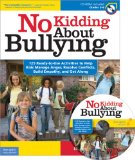
Book Review: No Kidding About Bullying

No Kidding About Bullying: 125 Ready-to-Use Activities to Help Kids Manage Anger, Resolve Conflicts, Build Empathy, and Get Along (Bully Free Classroom)
Author: Naomi Drew
Interest Level: Grades 3-6

From the Publisher's Website: School bullying is a serious problem in today’s schools—one that can have severe and long-lasting effects on victims. Based on a nationwide survey of more than 2,000 students and their teachers, No Kidding About Bullying gives educators and youth leaders a diverse range of activities they can use to help kids in grades 3–6 build empathy, manage anger, work out conflicts, and stop bullying by peers. Featuring 125 mini-lessons that may be completed in 20 minutes or less, the book is a flexible resource that can be used as a stand-alone curriculum or a complement to bullying prevention and character education programs already in place.

Student activities—including games, role plays, group discussions, art projects, and language arts exercises—affirm the importance of respect, listening, and kind actions at school. Kids learn skills they can use to calm down and conflict resolution techniques for situations when strong emotions threaten to disrupt the peace. With a focus on preventing teasing, name-calling, fighting, exclusion, and other hurtful actions, No Kidding About Bullying also features activities for when mistreatment is occurring. A CD-ROM includes all of the reproducible handouts from the book.

Why It's On My Bookshelf: Every month I get together with my fellow elementary school counselors in my district to do curriculum planning and sharing. I believe the exact quote when I introduced this new resource was, "This book is FULL OF AWESOMENESS!" If you are going to spend money - do it on this one. You will not be disappointed...you'll be empowered.

In the picture below I have tagged just about every activity there is in my copy. I'm pointing this out because sometimes when I buy curriculum...I am only able to use a few of the activities (which is upsetting to both me and my wallet). I'd use ALL 125 activities in No Kidding About Bullying.


I must say....I'm impressed. And let me tell you, it takes a lot to impress me. One of the lessons I've used with students is called - Basement or Balcony? It's about using the highest or the lowest part of who we are. After the lesson, the teacher of the class came up to me and said, "As you were teaching your lesson. I was working on my weekly newsletter to parents and I started typing what you were saying. I love it and am going to ask parents to please use this concept and language at home because we will be using them here." When teachers love your lessons - jackpot.

A few more of my favorite lessons from No Kidding About Bullying are: A Get-Along Classroom; Leave It at the Door; Creating Your Place In Other People's Memory Banks; Peace Shield; Using Think Alouds; Responsibility vs. Blame; Basement or Balcony?; Staying in the Balcony; Staying Respectful with Someone You Don't Like; Unhooking from Mean Words and Actions; Don't Get Stung by Zingers; and The Courage to be an Upstander. And these are just a few....I pretty much love them all. They are having a solid impact on our students and giving me a whole new world of language to use with kids.

I also like how author Naomi Drew has put the lessons together. They are EASY to do and I really dig the language she uses for discussions. She's making me a better elementary school counselor! As you know, I love all of my bibliotherapy and these activities can be a good companion to the books I use. However, I've also been able to fill up a 30 minute lesson just using an activity on it's own. And hear me out, this guide is not just for school counselors it's for teachers too! I'd really love to get No Kidding About Bullying for all of the 3-5th grade teachers at my school. It's a major community builder and a wonderful approach to building student relationships. My school year just got a lot better!


Find more educator goodness at Free Spirit Publishing

A Link to This Book and Others You Might Find Helpful:

Tuesday, October 12, 2010

How I Organize My Books

I received an email asking how I organize all of my books. I do not have a fancy sophisticated system. I tried to keep a list on my computer, but I am always buying so many books I couldn't keep up. So I decided to use good ol' fashion construction paper and just divide them by subject matter.


I've got about four shelves full of books. Not all of them get categorized. But the ones I use in classrooms and recommend to parents - get the full treatment. There is nothing worse than needing a book for a lesson and not being able to locate it.


This system has worked GREAT for me. Hope this helps anyone needing ideas on how to keep all of your bibliotherapy organized.

Wednesday, September 1, 2010

Book Review: The Unwritten Rules of Friendship: Simple Strategies to Help Your Child Make Friends


Author: Natalie Madorsky Elman and Eileen Kennedy-Moore

From the Book Jacket: "Nobody likes me" is a complaint that parents hear all too often, and few utterances make them feel more helpless. What can a parent do for a child who feels isolated, rejected, or out of sync with his or her peers?

This practical and compassionate handbook draws on the authors' experience working with thousands of children to offer you as a parent (or teacher or caregiver) tools you can use - including practical activities, games, and exercises - to identify a child's social strengths and to sharpen any child's social skills. 

Nearly every child has trouble with social relationships in some way, at some time. Some children feel awkward in groups. Some have trouble resolving arguments. Some stick out in such a way that they become natural targets for bullies. And some seem virtually incapable of making friends. No matter what your child's situation - whether he or she is  a born leader or a constant complainer, a wallflower or an unwitting aggressor, a poor sport or a perfectionist - you'll recognize your child's struggles in the case studies in this book. You'll discover why certain children don't "get" particular social conventions, and you'll learn simple strategies for increasing your child's awareness of the unspoken underpinnings of social interactions - knowledge that is essential to building, sustaining, and repairing relationships.

Why It's On My Bookshelf: INVALUABLE. I might just leave it at that and call this review done. Okay, but seriously The Unwritten Rules of Friendship is a wonderful resource. I've been using it for years and it is so HELPFUL to my work and how I view children. I read all kinds of parenting, counseling, and self-help literature aimed at kids so I know when I've got a good one when I just can't put it down and all I want to do is learn more and more about children. Sigh. It's a beautiful thing. I work with kids everyday on friendship. It's not something we talk about in the first week of school and then let it go. It's an ever evolving process. Relationships are tricky business and kids need all the help we can give them. HOWEVER, there is a way to do it so we don't become "helicopter" educators and parents. That's the number one reason I like this book. The strategies don't require me to "fix" all the problems. But I can at least help students navigate their way through the elementary years with an extremely good understanding of all the issues that accompany friendship. I've developed solid strategies and It's helped me develop language to use around friendship struggles. 

Quote on the cover says, "This book is saturated with really good advice for parents and, at least indirectly, for children themselves."  Really good advice is probably an understatement. Try awesome advice. Also, it's advice that makes sense. They don't throw a bunch of psycho babble at you. The authors have dedicated chapters to different types of children based on personality traits which is genius: The Vulnerable Child; The Intimidating Child; The Different Drummer; The Shy Child; The Short-Fused Child; The Little Adult; The Sensitive Soul; The Born Leader; and The Pessimistic Child. Each of those kids exists in some shape or form in my school. Over the years, I've received phone calls from frustrated parents or heard comments from teachers about how so and so can't make friends....this book offers hope. I will continue to recommend The Unwritten Rules of Friendship and look forward to re-reading it again this year as a refresher. Another thought - this might also be a great book club read for educators.


Tuesday, August 10, 2010

Review: Love and Logic On the Bus (CD)


By Bob Sornson Ph.D
2 Audio CDs, 106 min.


Description from the Love and Logic Website:

Laugh and learn, and take the frustration out of managing behavior on the school bus. During this live presentation, Dr. Bob Sornson offers effective techniques to:

Build relationships with students.
•Identify and teach the non-negotiable procedures on your bus.
•Use skills to set limits without anger.
•Give consequences with empathy.
•Develop a personal plan to manage your bus.

This CD is also great for training drivers at the district level.

Why It's On My Bookshelf: Let me start off by saying I'm a Love and Logic Super Fan. Anytime a seminar is in my city, I am front and center. Working in an elementary school, I need all the tools, strategies, skills, and wisdom I can get from Love and Logic. Setting limits without anger and delivering consequences with empathy have helped me build positive relationships with students. I will be doing lots of upcoming reviews on all of the Love and Logic books and Cd's that I use(quite frequently).

Recently, I was surfing their website and noticed a new product: Love and Logic On The Bus. Immediately, I thought of how there seems to be more and more (AND MORE) bus problems related to behavior. Kids not staying in their seats, kids bullying each other, and being disrespectful to the bus driver....those are just a few behaviors taking up a lot of office time when kids need to be in the classroom. We've tried all kinds of interventions like professional lectures, suspensions from the bus, and assigned seats. These are band aid measures.

Bus drivers need more training and support when it comes to managing behavior. I know what it's like to manage 30 kids in the classroom....how about having 60 kids!  Bus drivers have a tough job. They are responsible for getting students to and from school in a safe manner not to mention dealing with all of the behavior problems that might occur along the way.

Love and Logic On The Bus has a lot of valuable information and is extremely empowering. Speaker Bob Sornson covers the principles of Love and Logic while also emphasizing how important it is for bus drivers to establish and build relationships with ALL students; teach clear and high expectations; practice practice practice the procedures; set limits in a firm and loving way; and deliver consequences with empathy and without anger. If your school district does behavior management trainings with bus drivers then you need this CD as an added resource and guide. And if you don't do trainings, this is a perfect way to get started.  

Friday, August 6, 2010

Book Review: NurtureShock: New Thinking About Children

Author: Po Bronson and Ashley Merryman

I read NurtureShock with a group of teachers from my school. We all sang high praises and had stimulating conversation at each meeting as we went through the chapters. I was preparing my blog post of NurtureShock when I came upon a review that took the words right out of my mouth. Let me introduce you to - Sunny - author of the fabulous blog Caffeinated Teacher (I'm useless without a diet coke). I'm thinking she should have been part of our book club! Sunny has graciously allowed me to post her thoughts on NurtureShock.

Why It's On Sunny's (and mine too) Bookshelf: I am enthralled with this book. There are many reviews on Amazon and some critiques have said it isn't much in the way of a parent guide. I don't think it was intended to be a parenting guide. As a teacher, I am reading it with wonder and sometimes downright fascination as I realize how I have seen some of these things occur right in front of me. I am only on Chapter 5 (of 10) and have found myself absolutely absorbed with everything they've written and the mass research to support things.

They discuss how praise can actually be detrimental even when we think we are providing something good for our children; how children today are sleeping on average an hour less than a few decades ago (and how that is affecting their IQ scores and ability to perform at school; why white parents don't discuss race (and frankly, this one hit the mark for me....as a white parent who teaches in a very diverse area, this is a topic I frequently avoid); and why kids lie. This is simply in the first four chapters!

I believe I am getting more out of this book because I'm not reading it through the lens of a parent as much as I am through the lens of a teacher. Some of this information is really causing me to pause and think.

I am always fascinated with research that discusses what we, as a collective society, are doing with our children nowadays in the midst of the technology we have and many people's obsession with doing more. This doesn't happen as much where I teach simply because of the SES differences, but I have known many families who practically run themselves ragged taking little Timmy and little Susie to this, that, or the other activity. Sometimes when I've heard these parents go through their schedules, my head has spun at the thought of that flutter of activity. I have to also wonder when those children get time to be children.

NurtureShock has given me some food for thought on what has happened to children in the last few decades, because of the choices we, as parents, have made. I'm perfectly happy to let my girls collect bugs (or as in the case this afternoon, a teeny tiny frog) in the backyard rather than carting them off to 2,000 activities that I fool myself into thinking is going to better prepare them to be the next Presidents of the United States or Rhodes Scholars.

 
Kids deserve to be kids, especially with the pendulum swings we're experiencing in education right now when more and more is pushed on students at younger and younger ages.

What appeals to me most about this book is these are not just two drones who are spouting off random opinions they think everyone should soak up and accept. They are providing real evidence from many studies to back up their claims. Read more of Sunny's Thoughts on Chapter 1 (the inverse power of praise) from her blog.....

Wednesday, July 21, 2010

Book Review: Teaching Kids With Mental Health and Learning Disorders in the Regular Classroom - How to Recognize, Understand, and Help Challenged (and Challenging) Students Succeed

Author: Myles L. Cooley, Ph.D.

About This Book: Generalized Anxiety Disorder (GAD). Nonverbal Learning Disability (NVLD).  Dysthymia. Oppositional Defiant Disorder (ODD). Asperger's Syndrome. Do you know what they are? Would you recognize them if you saw them? Would you know how to respond?

Mainstreaming was implemented with good intentions, but it left many teachers with the daunting task of helping students with mental health and learning disorders and related behavioral problems. Formerly taught in special education classes, these students are now in your classroom. If you don't always feel prepared or you sometimes feel overwhelmed, you're not alone. 

This accessible, ready-to-use guide describes mental health and learning disorders often observed in school children, explains how each might be exhibited in the classroom, and offers suggestions for what to do (and what not to do). -from the book jacket

Why It's On My Bookshelf: I'm starting to think maybe the greatest threat to education in the United States is teacher burnout. I don't think it's the children causing "teacher exodus."  Yes, it's true more and more classrooms each year are full of needy and challenging students. There are a lot of factors that go into burnout but blaming the children is not one of them. From my own personal experience as a school counselor, there seems to be a lack of strong preparation, training, and resources for educators in the area of mental health and learning disorders. Teaching Kids with Mental Health and Learning Disorders in the Regular Classroom is definitely part of the remedy to this problem.  When I discovered this resource, I immediately started putting it to good use.

Have you ever been in a student meeting where it feels like the "team" is not really on the same page? The intention to help the student is there, but the meeting gets off course or doesn't take a course. It can sometimes feel like there is a hush hushness about the disorder, confusion about the diagnosis, the "experts" are using different jargon that you don't understand, or there is too much time being spent on formalities like paperwork. It can feel very compartmentalized. I would highly recommend educators use this resource to relieve these problems so you can get to work on helping the student! It's an empowering tool that I absolutely love.

Each mental health and learning disorder is described concretely (about 3 paragraphs), provides behavior and symptoms to look for, and suggests easy classroom strategies and interventions to try. Educators work in busy and demanding jobs so tools that don't waste time are a must.  When the words "Receptive and Expressive Language Disorder" get thrown around - people can get lost.  It's great for giving a refresher about a disorder or disability. You don't need an intimidating 700 page psychiatric manual. But a practical resource like this guide can be a life saver. How many times have you been required to implement a plan for a student? It can be a frustrating process if you are under prepared. Use Teaching Kids with Mental Health and Learning Disorders in the Regular Classroom as part of your foundation for building the plan. A comment from a teacher after we read through the information on Tic Disorders, "That was great insight for the team." This is a solid resource and I've notice it helps my team feel more optimistic and supported.

If you have a professional learning library in your school, encourage your administrator to purchase a copy for your staff. It's definitely nice to have my own copy but it's not something to covet, make sure to share it with your colleagues when you see a need arise.

A final thought, this guide needs to be part of educator curriculums in graduate schools. I just can't stress this enough. If we want to set kids up for success, well lets set the teachers up first!


Find this title at Free Spirit Publishing. (this is one of my fave websites for educators)